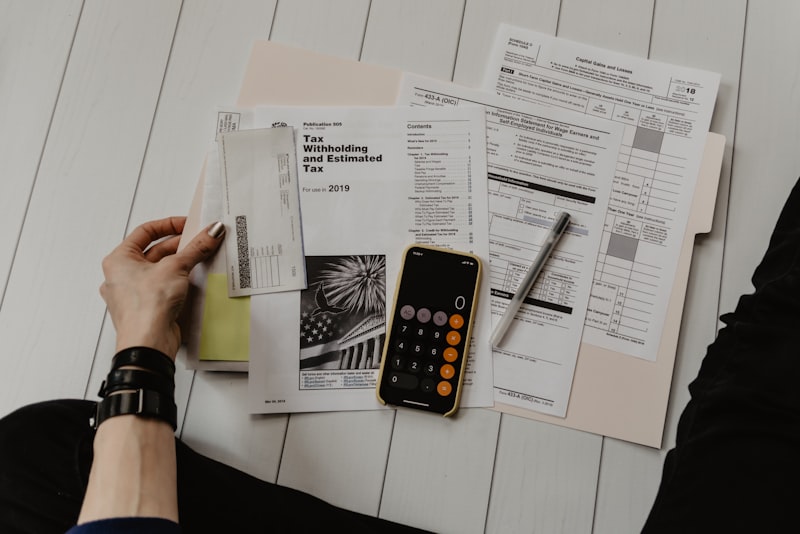
Most budgets fall apart in the same place. Not on the big, dramatic months, but on the ordinary ones where something perfectly predictable turns up and somehow still feels like a surprise. The car insurance renewal. The vet bill for the annual jabs. Christmas, which has arrived in December every single year of recorded history and yet manages to catch people short every time.
These costs are not emergencies. An emergency is the boiler dying in February. A car insurance renewal you've paid every year for a decade is not an emergency; it's an appointment you forgot to write down. A sinking fund is simply the habit of writing it down, in money, before it arrives.
What a sinking fund actually is#
The term comes from old company accounting, where a business would set aside money gradually to pay off a debt or replace expensive equipment when its time came. Stripped of the jargon, the idea is plain. You know a cost is coming. You know roughly how much it will be and roughly when. So instead of finding the whole amount in one month, you spread the saving across the months in between.
Say your car insurance is six hundred pounds a year. Paid in one lump, that's a brutal month. But six hundred divided by twelve is fifty pounds. If you quietly move fifty pounds into a dedicated pot every month, then when the renewal lands you simply pay it from a pot that already has six hundred sitting in it. The bill hasn't shrunk. What's changed is that you've already done the hard part, a little at a time, when it didn't hurt.
That's the whole mechanism. A sinking fund turns one painful bill into twelve boring ones. Boring is the goal. A good money habit should feel like almost nothing while it's happening.
A sinking fund is just a bill you've already paid, in slow motion.
How it differs from an emergency fund#
People sometimes mix these two up, and the difference matters. An emergency fund is for the things you cannot predict: a sudden job loss, an urgent repair, a trip you have to take at short notice for a family reason. It's a buffer against the unknown, and ideally you leave it alone for years at a time.
A sinking fund is the opposite. It's for things you can predict and fully expect to spend. You're not hoping you'll never touch it. You're planning to empty it, on schedule, for a known reason, and then start filling it again. One fund is for surprises; the other is for non-surprises that only feel like surprises because nobody set the money aside.
Keeping them separate protects both. If you raid your emergency fund every December for presents, it isn't really an emergency fund anymore. And if your "everything" savings account quietly holds the holiday money, the insurance money, and the new-tyres money all jumbled together, you'll never quite trust the balance, because you won't know how much of it is already spoken for.
Setting one up without overcomplicating it#
You don't need an app, a spreadsheet with formulas, or a complicated system. You need three honest answers for each expense: what is it, roughly how much, and roughly when.
- What — name it specifically. "Car insurance," not "car." "Christmas," not "gifts/social/other." A vague label invites you to dip in for unrelated things.
- How much — your best estimate, rounded up a little. Last year's figure is usually a fair guide.
- When — the month it's due, so you can count backwards and work out the monthly amount.
That's the entire setup. Take the total, divide by the number of months until it's due, and that's what you move across each month. If the renewal is eight months away and the cost is four hundred pounds, that's fifty a month. If it's only four months away, it's a hundred a month, which tells you something useful: you've found this expense a bit late, and next year you'll want to start the moment the old one is paid.
Where you keep the money is less important than keeping it separate from your spending account. Many people use a second savings account, or one of the "pots" or "spaces" features that lots of banks now offer, which let you ring-fence amounts under clear labels without opening new accounts. Some prefer literal envelopes of cash. The method doesn't matter. The separation does. Money that sits in your current account alongside the grocery budget has a way of becoming the grocery budget.
Choosing what to fund first#
Here's the part where good intentions usually collapse. People list every irregular expense they can think of, total up the monthly cost, discover it's more than they can spare, and abandon the whole thing. Don't do that.
Start with one. Pick the single expense that hurt the most last time, the one that genuinely knocked you sideways. For a lot of households that's either the annual car costs or Christmas, because both are large, both are certain, and both tend to arrive when money is already tight. Fund that one first. Let it run for a few months until it feels automatic and you've stopped noticing the transfer.
Then add a second. Maybe the renewals you pay yearly because they're cheaper that way: a breakdown cover, a professional subscription, a streaming bundle. Maybe an annual dental check, or the boiler service, or the kids' school shoes that mysteriously cost more every autumn. The list is personal, and it's fine for it to grow slowly. A sinking fund you can actually sustain beats five ambitious ones you give up on by March.
A gentle warning worth saying plainly: a sinking fund only works if the money in it is genuinely available, not borrowed from somewhere you'll need it. If you're already stretched to the edge each month, the honest first step isn't a clever savings system; it's looking hard at the gap between what comes in and what goes out. Sinking funds are a tool for organising money you have, not for conjuring money you don't.
Why the boring version wins#
There's nothing impressive about a sinking fund. It won't make you wealthy, it pays little or no interest worth mentioning, and you can't tell a good story about it at dinner. What it does is quieter than that. It removes a recurring source of stress from your life by making the predictable, predictable again.
The deeper benefit is what it does to how the year feels. When the big bills are already covered before they arrive, the months stop having traps in them. December becomes just December. The insurance renewal becomes a forwarded email and a two-minute payment, not a small crisis. You spend less energy bracing for costs you always knew were coming, because the money is already there, doing exactly the boring job you gave it.
That's the quiet trick. Not earning more, not cutting to the bone, just moving known costs out of the month they fall in and spreading them across the ones before. Start with one fund, name it clearly, and leave it alone until it's needed. The first time a dreaded bill arrives and you pay it without flinching, you'll understand why the dullest tool in budgeting is also one of the most reliable.